- Головна/
- Publications/
- Project Results on Strengthening Community Participation in Natural Resource Management Presented in Kyiv
Project Results on Strengthening Community Participation in Natural Resource Management Presented in Kyiv
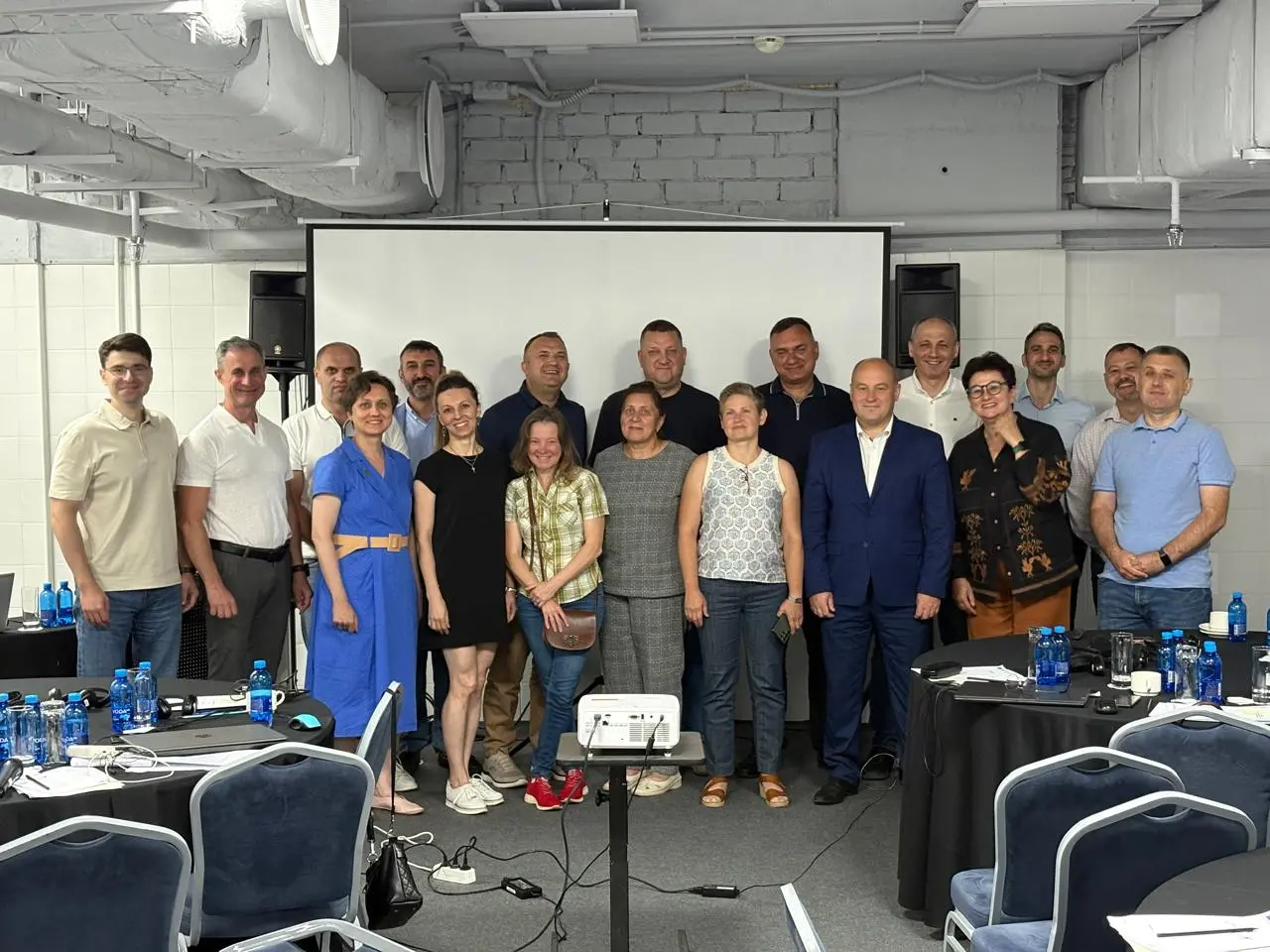
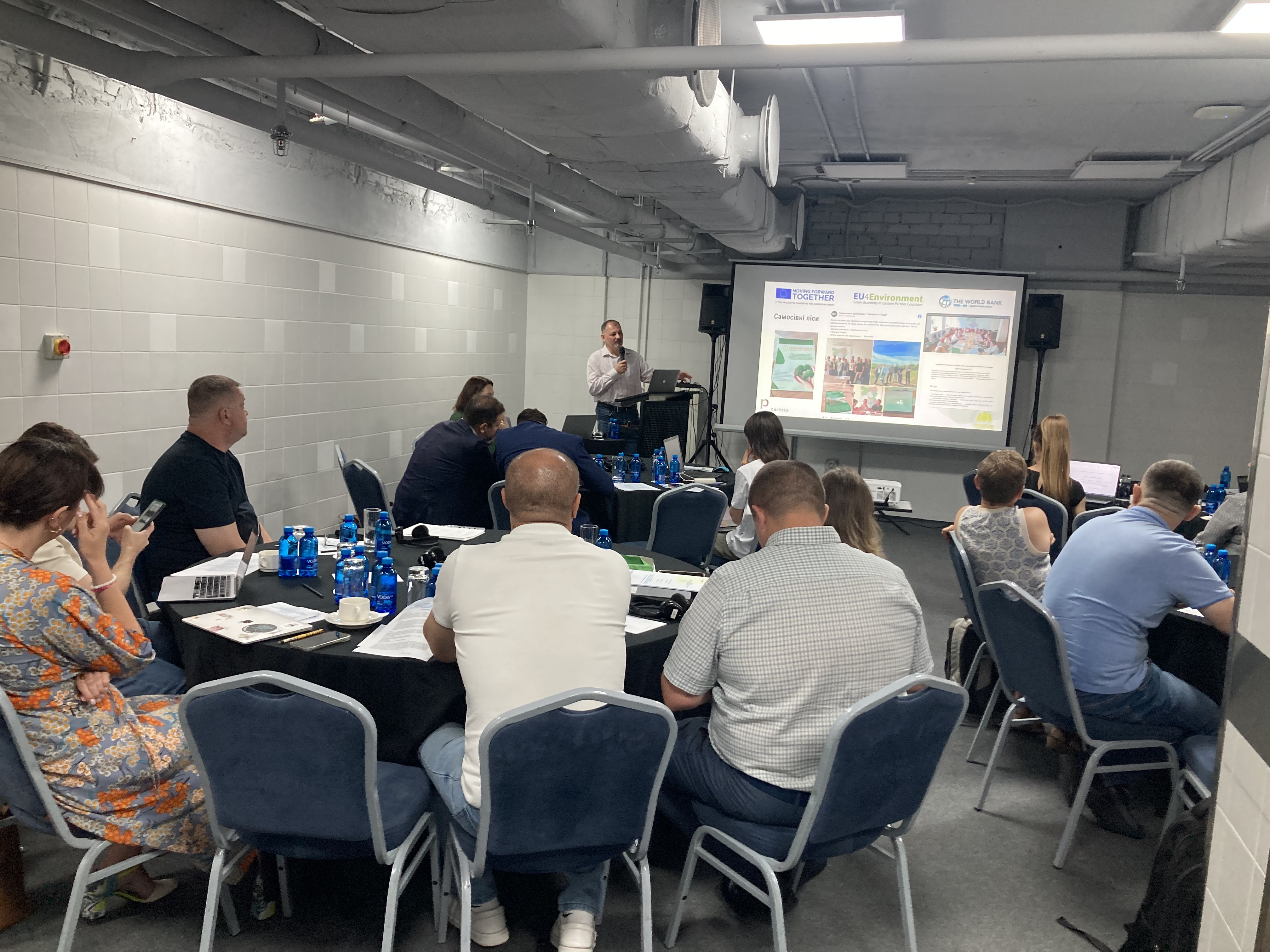
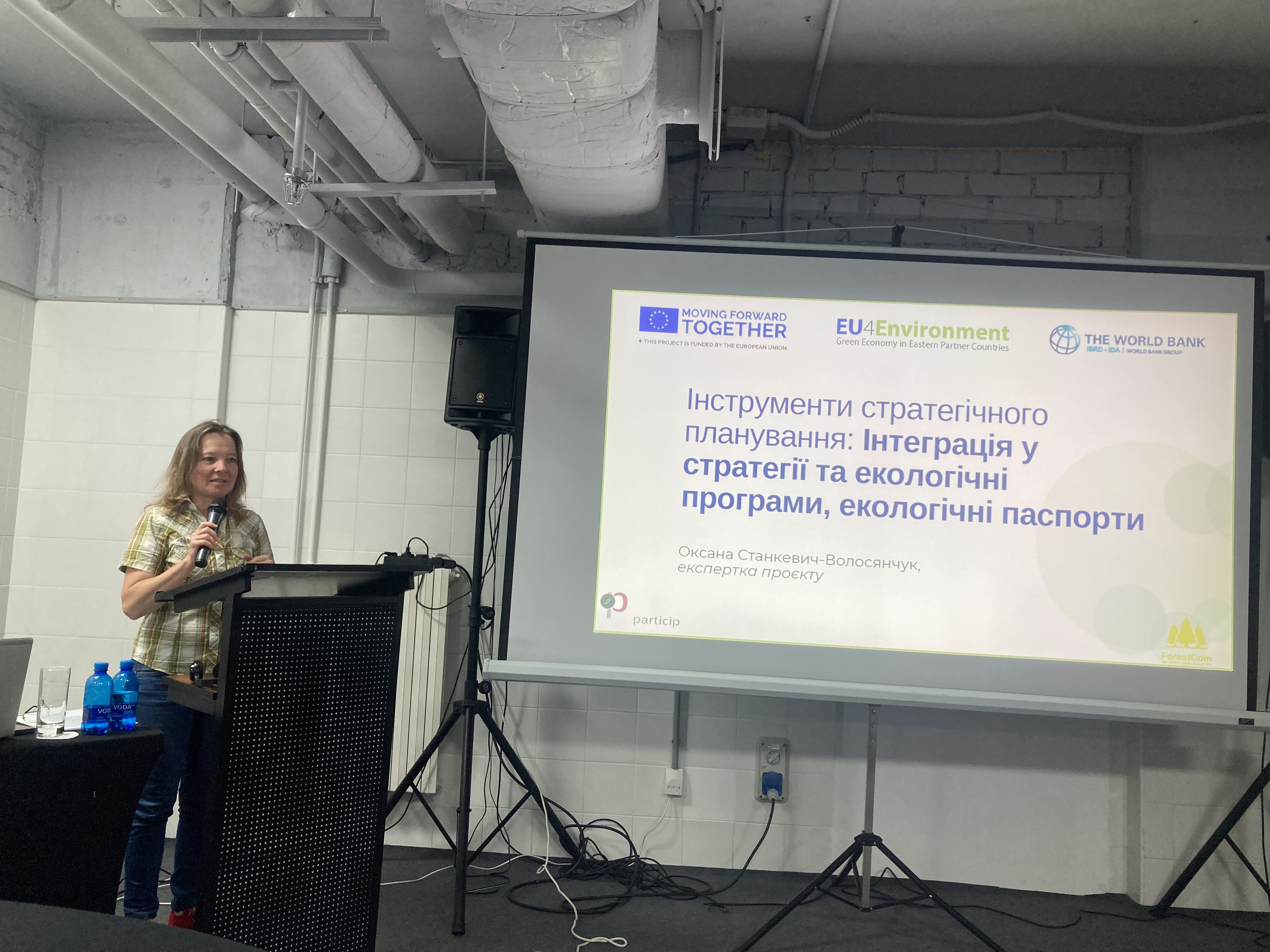
On 21 July, Kyiv hosted the closing seminar of the project "Supporting Sustainable Natural Resource Management and Economic Development through Community Engagement in Ukraine," implemented by the World Bank under the EU4Environment Programme, funded by the European Union. The project was implemented by a consortium led by the German consulting company Particip GmbH in partnership with the Ukrainian NGO Forest Initiatives and Communities (ForestCom), which coordinated project implementation in Ukraine and coordinated work with the pilot communities.
Over the course of the year, the project team worked together with eight pilot communities, conducting analytical studies, consultations, training events, and developing practical tools to strengthen community participation in natural resource management. The closing seminar provided an opportunity to review the project's results and discuss how the practical tools developed under the project are already being applied by the pilot communities.
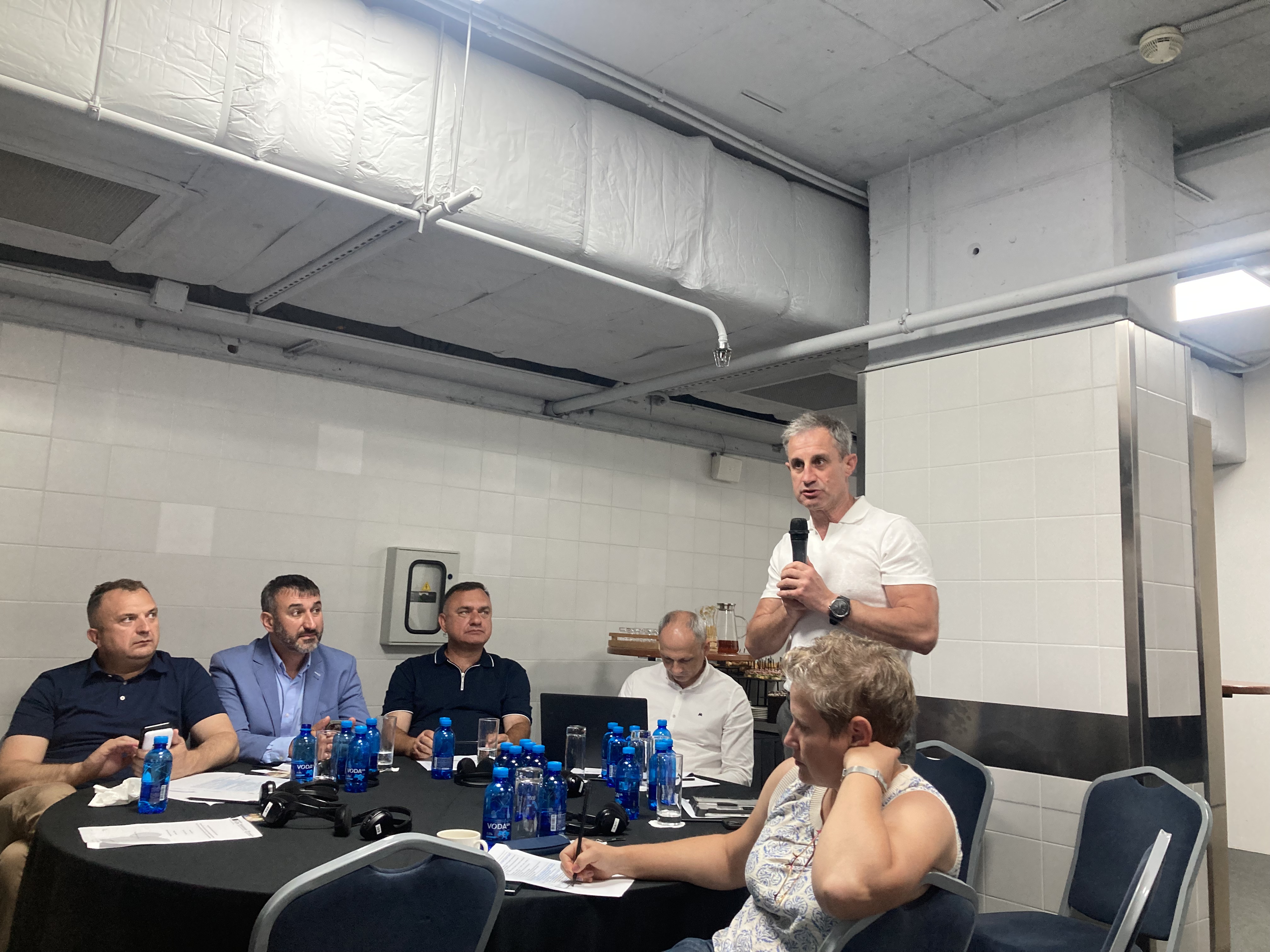
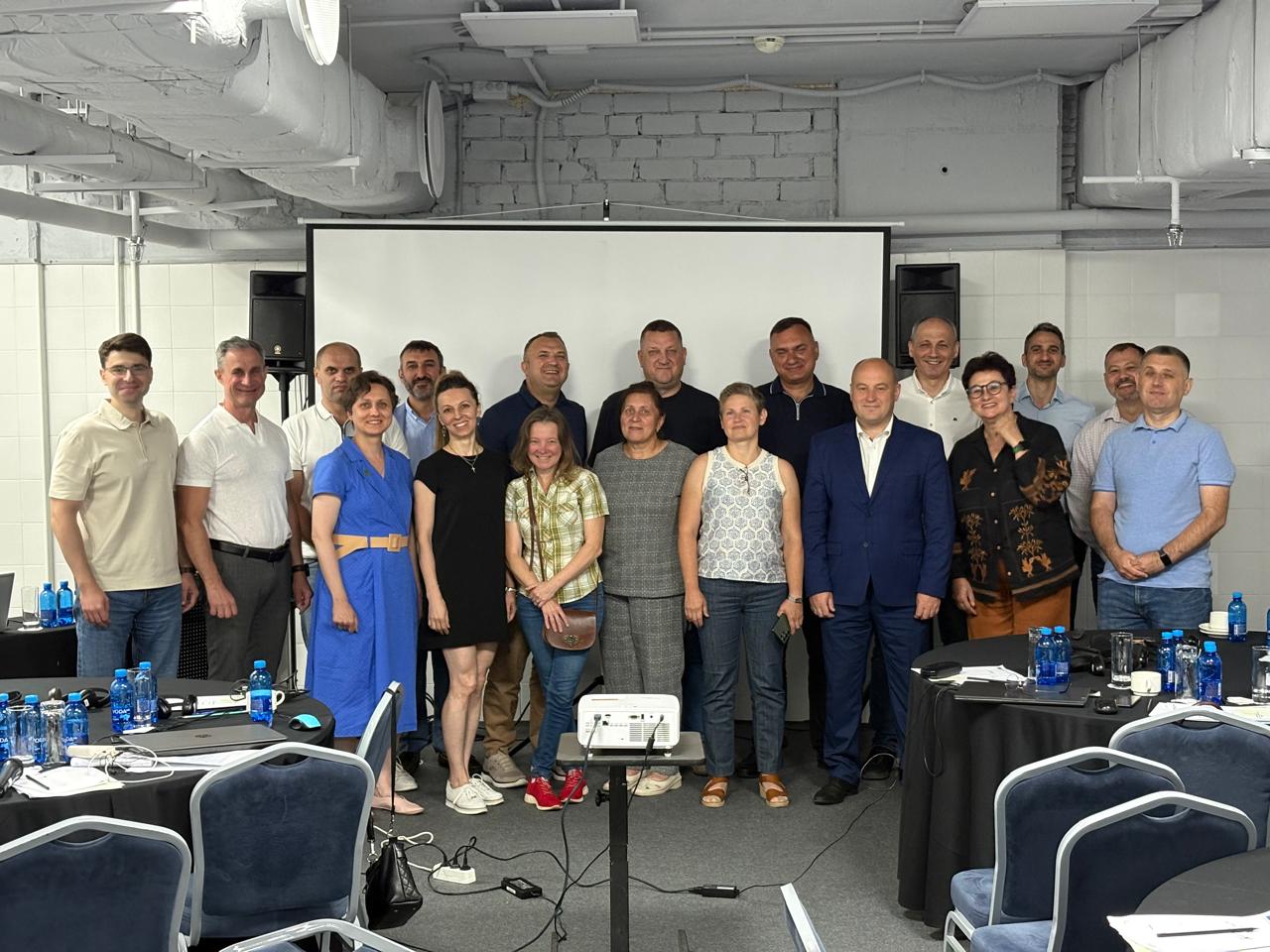
The seminar brought together 93 participants (26 attending in person and 67 joining online), including representatives of territorial communities, government authorities, the World Bank, Particip GmbH, research institutions, environmental non-governmental organizations, FSC Ukraine, the National Forest Voluntary Certification System Association, the expert community, and other interested stakeholders.
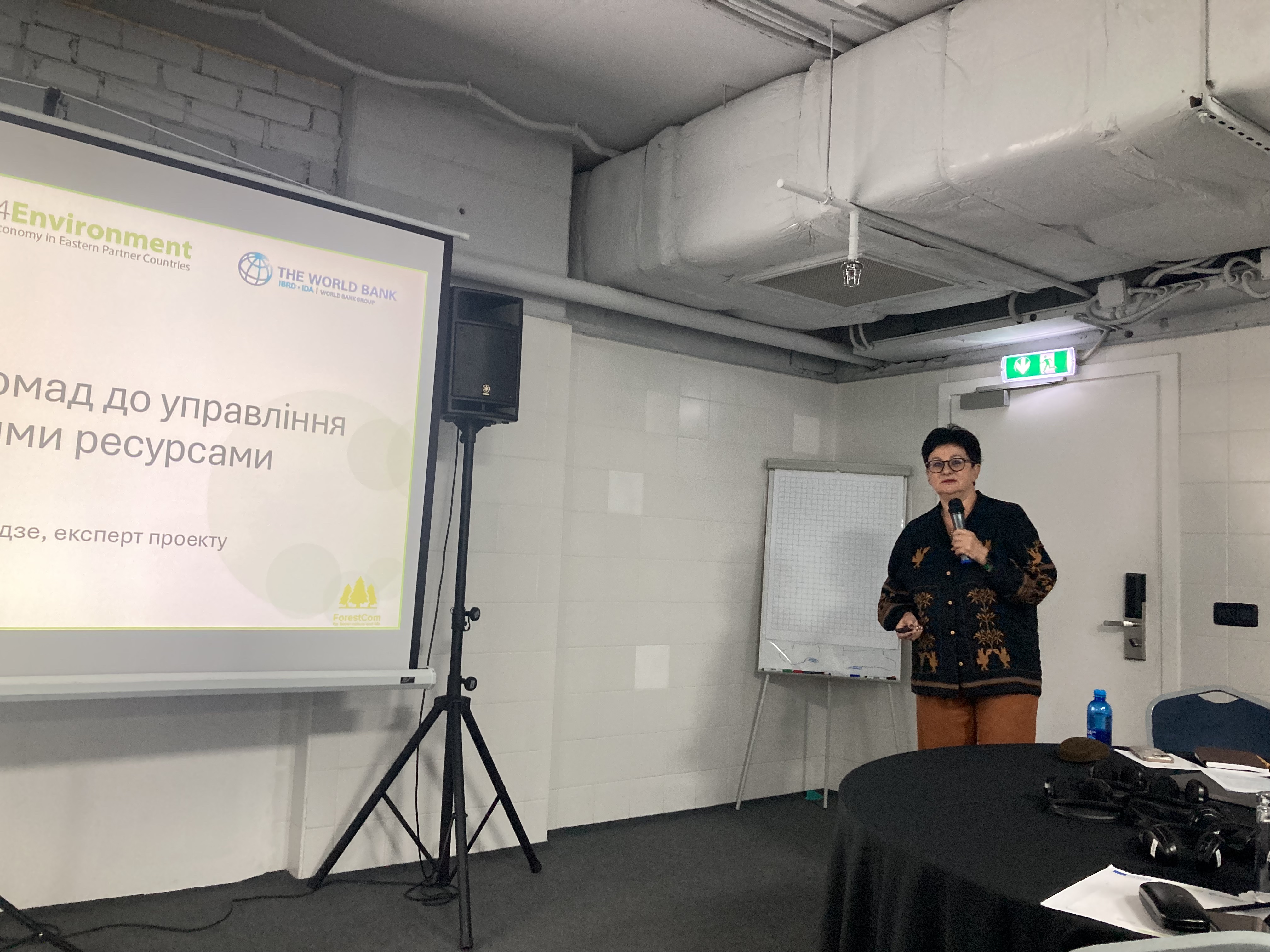
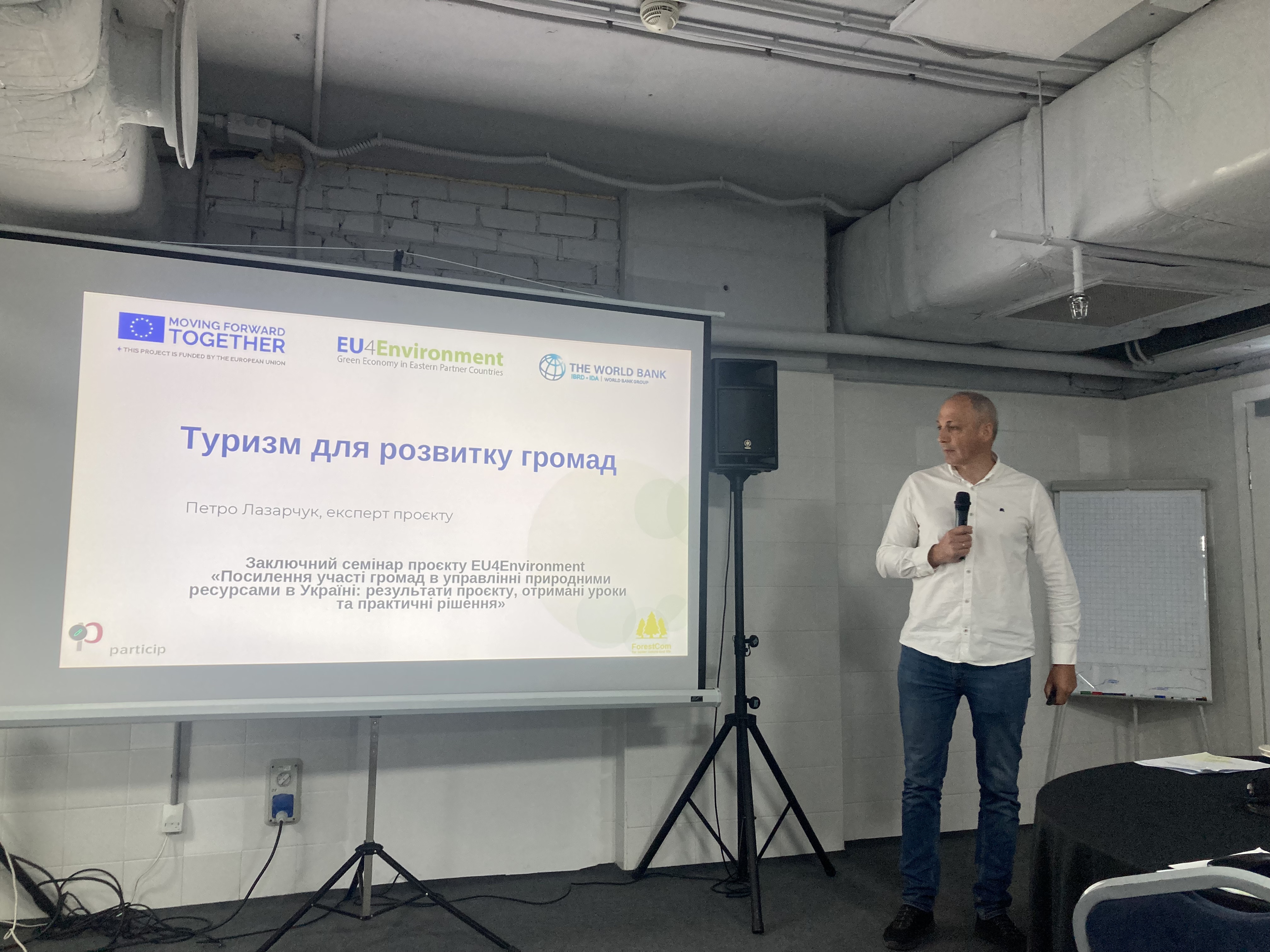
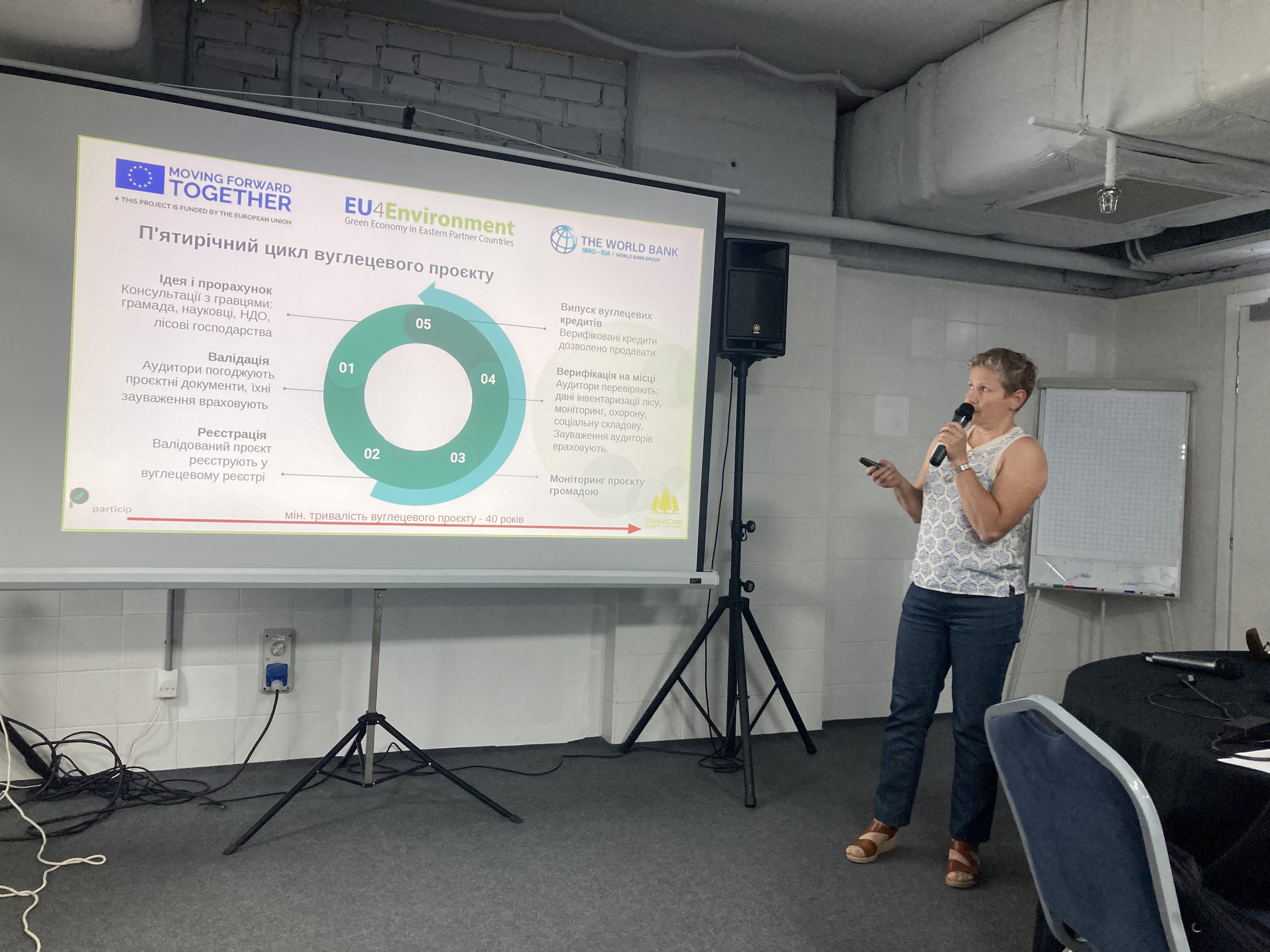
Throughout the day, project experts presented the results of the analytical and advisory work conducted in eight pilot communities, as well as practical tools developed for the project’s thematic areas. As part of the project, a Practical Guide for Local Communities was also developed, which summarizes the project’s main findings and contains practical tools for their implementation at the local level. International and Ukrainian experts contributed to the preparation and presentation of the project’s results, including Winfried Süss, Marine Elbakidze, Dmytro Karabchuk, Tetiana Pyvovar, Oksana Stankevych-Volosyanchuk, Petro Lazarchuk, Oleh Storchous, and Roksolana Petrovska.
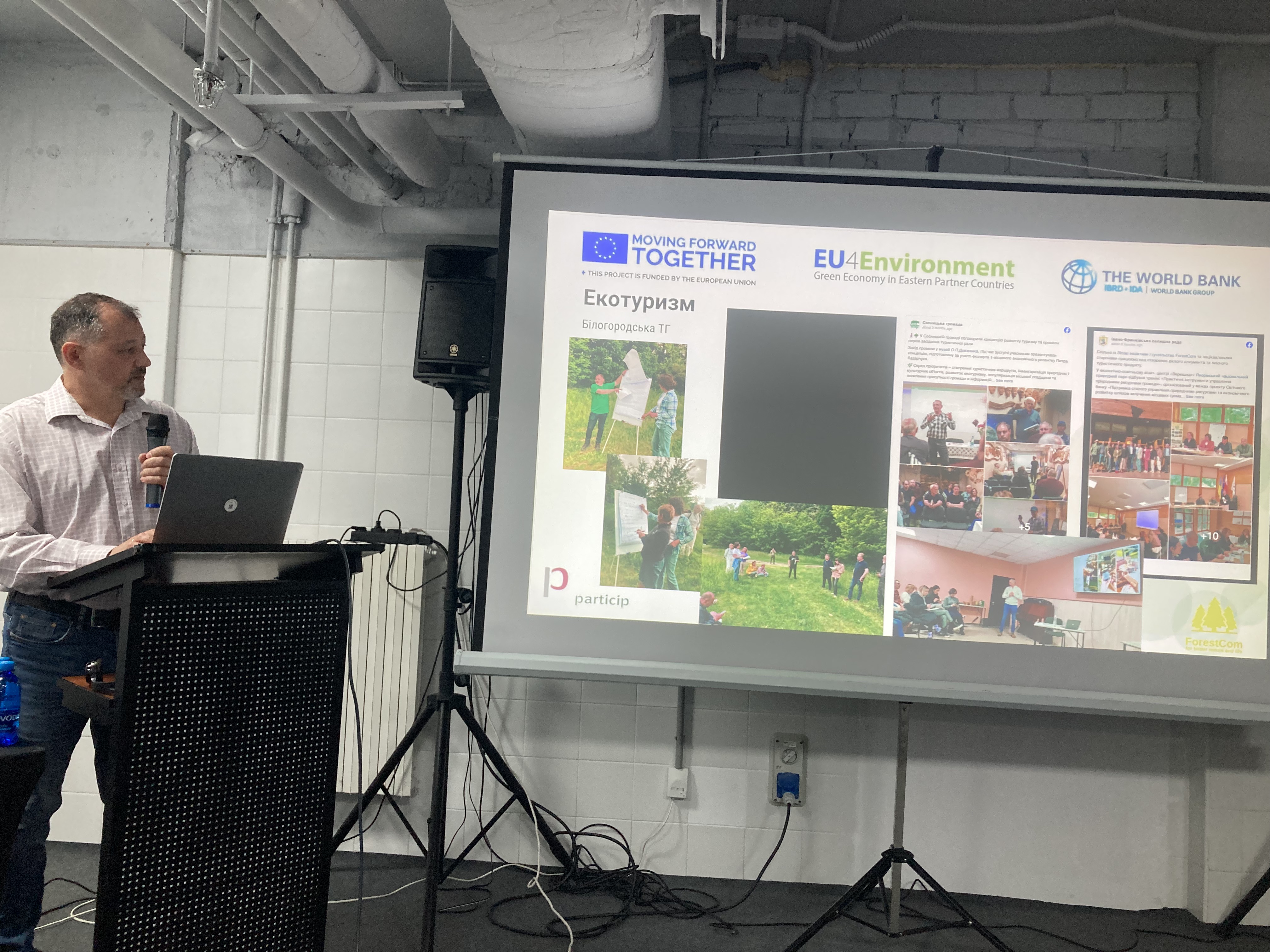
Individual thematic sessions focused on the management of secondary succession forests, the development of ecotourism, the use of non-timber forest products, voluntary carbon projects, mechanisms for community participation in natural resource management, and the integration of environmental protection issues into strategic community development planning.
An important part of the seminar was the presentations by representatives of the pilot communities, who shared the first results of applying the project's recommendations in practice.
For example, the Ivano-Frankivska Community has already established a Tourism Council, launched an inventory of tourism resources, and plans to incorporate the project's recommendations into the updated Community Development Strategy and Environmental Protection Programme. The Sosnytska and Kurisovska communities have established tourism working groups, strengthened cooperation with local businesses, and are developing new tourism routes. The Dovzhanska Community has already participated in a forest management planning meeting, proposing that issues related to non-timber forest products be taken into account during forest management planning, while also initiating corresponding amendments to its Community Development Strategy. The Bilohorodska Community is preparing its Environmental Passport, the Hoshchanska Community is working towards establishing a communal forestry unit, and the Boryslavska Community plans to apply the GIS-based methodology developed under the project to inventory tourism resources and municipal forests in support of recreation development and the preparation of investment projects.
These examples demonstrate that the recommendations developed under the project are already being applied by communities in their day-to-day work.
The final session of the seminar focused on proposals prepared by the project experts to improve public policy and legislation in the field of natural resource management. Representatives of local communities, government authorities, research institutions, international organizations, and civil society discussed the legislative and institutional changes needed to strengthen the role of territorial communities in decision-making related to the use and management of natural resources.
One of the project's key conclusions is that territorial communities are ready to take a more active role in natural resource management when they have clearly defined responsibilities, practical tools, and opportunities to cooperate with government authorities, forest users, businesses, and civil society.
The Practical Guide for Territorial Communities is currently undergoing final review by World Bank reviewers. Upon completion of this process, it will be published and disseminated among territorial communities and other interested stakeholders in accordance with the agreed publication procedures.
We sincerely thank all pilot communities, partners, experts, and seminar participants for their cooperation, open dialogue, and contribution to strengthening sustainable natural resource management in Ukraine.